The Catch-Up Trade: Software, Small Caps, and the Risks of Rosy Setups
Why the market’s overlooked corners may not be as cheap—or as safe—as they look for retirement-focused investors.
- Topic
- Market power
- Published
- Updated
- Reading time
- 6 min read
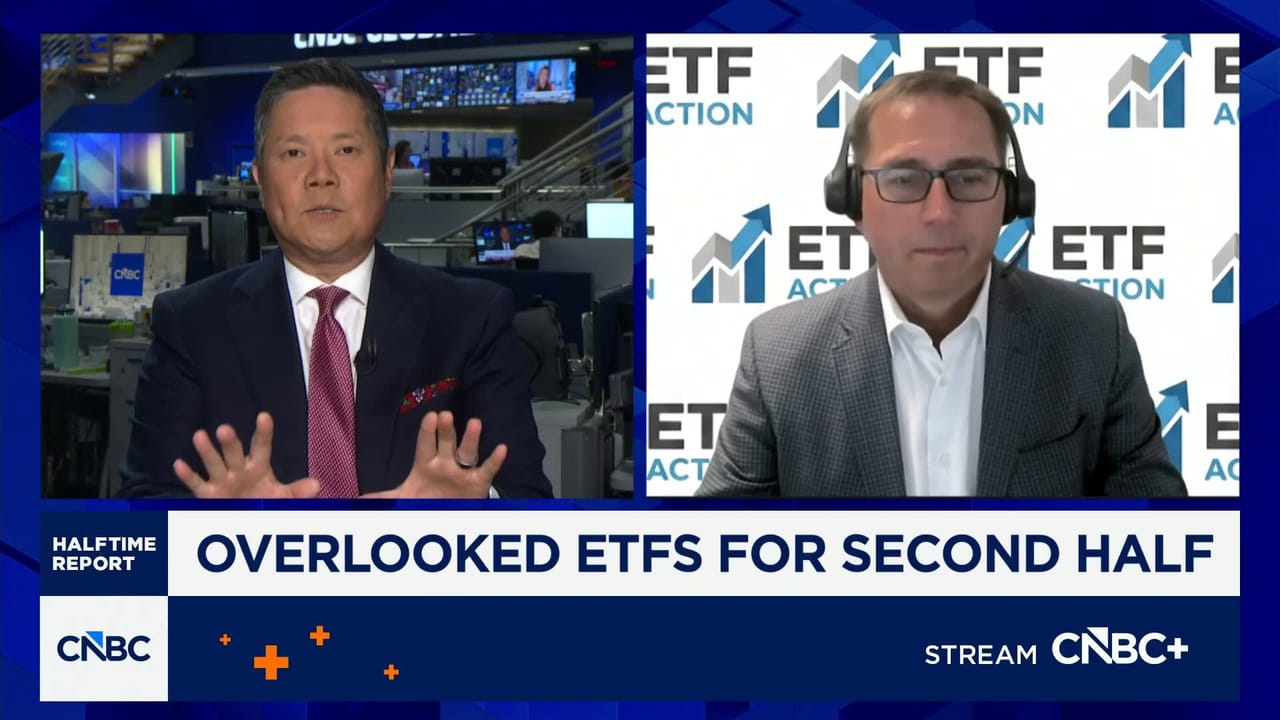
The second half of 2024 is shaping up as a referendum on the "catch-up trade." After a first half dominated by AI semiconductors and mega-cap tech, the narrative is shifting to overlooked corners of the market: software, cloud computing, mid-caps, small-caps, and emerging markets ex-China. The pitch is simple: these areas are undervalued, underappreciated, and poised to benefit from a broadening market. But for investors—especially those focused on retirement, income, and capital preservation—the stronger case may be for caution.
Mike Akins of ETF Action made the bull case on CNBC this week: software and cloud computing names have fallen from "nosebleed valuations" to levels in line with—or even below—the broader market, while still offering "strong growth scenarios." Mid- and small-cap ETFs, meanwhile, are trading at "extremely depressed" multiples, with earnings growth estimates that paint a "pretty rosy setup." Emerging markets ex-China, particularly those with memory chip exposure, are also in the mix, though Akins warned about the concentration risk in those names.

The Software Story: From Apocalypse to Opportunity?
The "SaaS apocalypse" narrative has been circulating for over a year. High-growth software stocks, once the darlings of the market, have been repriced as interest rates rose and growth slowed. The sell-off has been brutal: many names are down 30-50% from their 2021 peaks, and some are now trading at single-digit forward P/E ratios. The question is whether this is a buying opportunity or a value trap.
Akins’ argument hinges on two claims: (1) software valuations are now reasonable relative to the broader market, and (2) earnings growth will reaccelerate as companies prove they are still essential to enterprise operations. The first claim is easier to verify than the second.
The evidence on valuations is mixed. While some software names are cheaper than they’ve been in years, the sector as a whole is not uniformly undervalued. Many companies are still trading at premiums to the S&P 500, particularly those with strong free cash flow or pricing power. The risk is that the market is not mispricing these stocks—it’s correctly pricing in slower growth, higher churn, and a more competitive landscape. If earnings estimates are too optimistic, today’s "reasonable" multiples could look expensive in hindsight.
The second claim—that software is still essential—is harder to assess. Enterprise software spending is notoriously sticky, but it’s not immune to macro pressures. If corporate budgets tighten further, even mission-critical software could see slower adoption or higher churn. The market may be underestimating how much of the sector’s growth was pulled forward during the pandemic, leaving less room for upside surprises.
Small and Mid-Caps: The Multiple Expansion Bet
The case for small- and mid-cap ETFs is even more dependent on valuation. Akins’ thesis rests on two pillars: (1) depressed multiples are poised to expand, and (2) earnings growth will reaccelerate. Both are speculative.
Small-cap valuations are indeed cheap by historical standards. The Russell 2000’s forward P/E ratio has spent most of the past two years below its 20-year average, and many mid-cap ETFs are trading at similar discounts. But cheap can stay cheap if the fundamentals don’t improve. Small-caps are more sensitive to interest rates, credit conditions, and economic growth than large-caps. If the Fed keeps rates "higher for longer," or if the economy slows, these stocks could face headwinds that offset their valuation discounts.
The earnings growth argument is also shaky. Analysts expect small-cap earnings to grow faster than large-caps in 2025, but these estimates have a history of being revised downward. Small-caps are more exposed to domestic economic cycles, and their profitability is often lower than large-caps. If margins compress further, earnings growth could disappoint, leaving investors with stocks that are cheap for a reason.

Emerging Markets Ex-China: The Memory Chip Gamble
Akins’ third catch-up trade—emerging markets ex-China—is the most speculative. The thesis here is that these markets have been overlooked while China and AI semiconductors dominated the narrative. The risk, as Akins noted, is concentration: many emerging markets ETFs have heavy exposure to memory chip stocks, which have had a "crazy run" in 2024.
Memory chips are a boom-bust industry. Prices can swing wildly based on supply and demand, and the sector is highly sensitive to global economic conditions. If the global economy slows, or if supply catches up with demand, memory chip stocks could correct sharply. For retirement-focused investors, this is not a sector that offers stability or income—it’s a leveraged bet on a narrow part of the tech cycle.
There are ways to mitigate this risk—active management or ETFs with different weighting methodologies, as Akins suggested—but these come with their own trade-offs, such as higher fees or tracking error. For most investors, emerging markets ex-China are not a straightforward "catch-up" play but a high-risk, high-reward gamble.
What Retirement Investors Should Watch
For investors focused on retirement, income, and capital preservation, the catch-up trade narrative demands skepticism. The stronger case is not that these areas are undervalued, but that they are riskier than they appear—and that the market may already be pricing in some of the upside.
Here’s what to watch:
1. Valuation vs. Fundamentals
Valuation alone is not a catalyst. For software, small-caps, and emerging markets, the question is not whether they are cheaper than they were in 2021, but whether they are cheap enough to compensate for slower growth, higher rates, and macro risks. If earnings estimates are revised downward, today’s "reasonable" multiples could look expensive.
2. The Fed and Interest Rates
Small-caps and mid-caps are particularly sensitive to interest rates. If the Fed keeps rates elevated—or if inflation reaccelerates—these stocks could underperform. Retirement investors should ask whether they are being adequately compensated for this risk, especially when safer assets like Treasuries are yielding over 4%.
3. Crowding and Positioning
The catch-up trade is not a secret. If too many investors pile into small-caps, software, or emerging markets, the upside could be limited. Watch for signs of crowded positioning, such as ETF inflows or options market activity, which could signal that the easy money has already been made.
4. Alternatives for Income and Stability
For retirement investors, the bar for taking risk is higher. If the goal is income and capital preservation, there are alternatives to speculative catch-up trades. ETFs like SCHD (Schwab U.S. Dividend Equity ETF) offer dividend growth, lower volatility, and exposure to high-quality companies with durable competitive advantages. With the 10-year Treasury yielding over 4%, the opportunity cost of taking equity risk is higher than it’s been in years.

The Bottom Line
The catch-up trade is a compelling narrative, but narratives don’t always translate into returns. For software, small-caps, and emerging markets ex-China, the risks are real: valuation is not destiny, earnings growth is not guaranteed, and macro conditions could easily turn against these trades.
For retirement investors, the stronger case may be for patience. The market’s overlooked corners are not necessarily undervalued—they may just be riskier than they appear. In an environment where safer assets offer competitive yields, the bar for taking equity risk is higher than it’s been in years. The catch-up trade may have its day, but for now, caution is the more prudent path.
Research briefing
Get new Monopoly MOAT research by email.
New analysis and publication updates, sent when they are published.
Discussion