Retirement ETFs, AI Chips, and Inflation: What Investors Are Missing
Hidden risks in retirement ETFs, SK Hynix’s AI bet, and the Fed’s inflation fight—beyond the headlines.
- Topic
- Market power
- Published
- Updated
- Reading time
- 5 min read
Retirement investing in 2026 is a paradox. The 10-year Treasury yields ~4.13%, offering a seemingly risk-free alternative to equities. Yet, retirement ETFs like SCHD—a perennial favorite for dividend yield and stability—continue to attract inflows, even as valuations stretch and the Fed’s inflation fight drags on. The question for investors isn’t just whether these ETFs can deliver income, but whether they’re durable in a world where inflation, AI-driven disruption, and shifting market structure complicate the retirement equation.
The Bloomberg Money episode from July 10, 2026, touched on three themes that intersect with retirement investing: the role of retirement ETFs, SK Hynix’s AI memory chip ambitions, and the Fed’s inflation dilemma. But the conversation only scratched the surface. Below, we dig into what the market is missing—and where the real risks and opportunities lie.
Retirement ETFs: Priced for Perfection?
The segment on the Trump accounts—tax-advantaged ETF-based savings plans for children—highlighted a broader trend: the relentless demand for simple, income-generating ETFs in retirement portfolios. The default option? A State Street S&P 500 ETF with a 0.02% fee. For retirees, however, the go-to choice is often SCHD, the Schwab U.S. Dividend Equity ETF.
SCHD’s appeal is straightforward: a 3.5%+ dividend yield, monthly distributions, and a focus on high-quality, dividend-growing stocks. It’s the kind of ETF that retirees can set and forget—until the market forgets to cooperate. The problem? Valuation.
The video also touched on the 60/40 portfolio’s struggles in 2022, a year when both stocks and bonds sold off in tandem. While the 60/40 has since recovered, the episode’s discussion of AI-driven portfolio optimization raises a critical question: Are traditional retirement portfolios obsolete?
SK Hynix: The AI Memory Bet with Binary Outcomes
SK Hynix’s U.S. debut was the show’s marquee event, with the stock surging 17% on its first day of trading. The narrative is compelling: SK Hynix dominates high-bandwidth memory (HBM) chips, a critical component for AI training and inference. With a 57% market share in HBM, the company is positioned to ride the AI wave—assuming the wave doesn’t crash.
The video highlighted SK Hynix’s $35 billion U.S. investment plan, framed as a win for American manufacturing and AI leadership. But the reality is more nuanced. SK Hynix’s U.S. factories will focus on mature nodes, not the cutting-edge technology driving AI demand. The company’s memory-as-a-service model could redefine its economics, but it’s unproven at scale.
The episode also mentioned leveraged ETFs tied to SK Hynix, a sign of speculative fervor. While these products may attract short-term traders, they’re a red flag for long-term investors. Leveraged ETFs are not buy-and-hold instruments.
Inflation and the Fed: The Wage-Price Spiral Risk
The episode’s inflation discussion centered on the Fed’s core PCE target and whether the U.S. can return to 2% inflation within 12-18 months. Former Fed Governor Randall Kroszner’s optimism hinged on AI-driven productivity gains, a thesis that’s gaining traction but remains speculative.
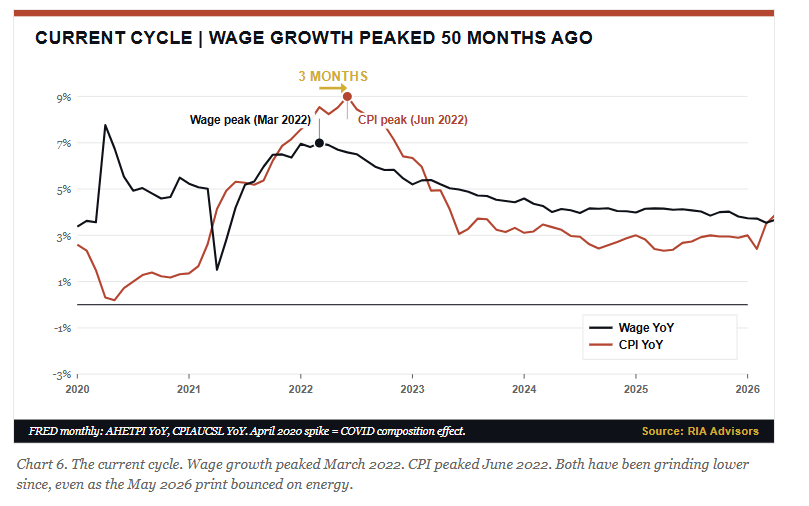
The stronger version of the inflation thesis isn’t about whether the Fed can hit its target—it’s about whether wage growth keeps pace with inflation. The video cited Brown University’s tuition hikes (31% since COVID) as a microcosm of the broader inflation problem: prices are rising faster than wages for many Americans.
The episode also touched on Social Security’s solvency crisis, with the trust fund projected to exhaust its reserves by 2032-2034. If benefits are cut or taxes rise, retirees may need to increase their withdrawal rates, putting additional pressure on retirement portfolios.
What Investors Should Watch
1. SCHD’s Valuation vs. Interest Rates - If the 10-year Treasury yield climbs above 4.5%, SCHD’s dividend yield may no longer look attractive relative to risk-free alternatives.
2. SK Hynix’s HBM Market Share - If SK Hynix’s market share falls below 50%, its AI narrative could unravel. Monitor quarterly earnings reports for signs of margin compression.
3. Wage Growth vs. Inflation - If wage growth stalls below 3.5% annualized, the Fed may struggle to justify rate cuts even if inflation cools. This could prolong the high-rate environment.
4. Social Security Reform - If Congress fails to act on Social Security by 2026, expect volatility in retirement-focused assets as investors price in potential benefit cuts.
5. Rebalancing vs. Buy-and-Hold - The episode’s discussion of AI-driven rebalancing tools raises a key question: Is the 60/40 portfolio dead? For retirement investors, the answer may depend on embracing alternative assets.
The Bottom Line
The Bloomberg Money episode framed retirement investing, AI chips, and inflation as distinct stories. But for investors, they’re interconnected. Retirement ETFs like SCHD offer stability, but their valuations assume a Goldilocks economy. SK Hynix’s AI bet is high-risk, high-reward. And the Fed’s inflation fight isn’t just about hitting 2%—it’s about ensuring wage growth keeps pace with rising costs.
The market is pricing in a soft landing. The risk? It’s already priced in.
Research briefing
Get new Monopoly MOAT research by email.
New analysis and publication updates, sent when they are published.
Discussion