Ken Griffin on Hedging, AI Moats, and the Risks the Market Ignores
Citadel’s founder reveals how he stress-tests portfolios, why AI is eroding competitive advantages, and the geopolitical fragilities that could trigger a depression.
- Topic
- Market power
- Published
- Updated
- Reading time
- 5 min read

Ken Griffin doesn’t believe in hedging for every tail event. He believes in stress-testing for the ones that could break you.
In a recent conversation at Goldman Sachs’ Apex Symposium, the Citadel founder laid out a framework for portfolio resilience that is equal parts pragmatic and sobering. It’s not about predicting the future—it’s about surviving the worst version of it. And right now, the worst versions include geopolitical fractures, AI-driven moat erosion, and an energy infrastructure that may not keep pace with the compute demands of the next decade.
The Hedging Philosophy: Tolerable Loss, Not Invincibility
Griffin’s approach to hedging is disarmingly simple: define the worst-case scenario, quantify the loss, and ensure it’s tolerable. This isn’t about eliminating risk—it’s about sizing it. "You’ll never manage a portfolio for every possible tail event," he says. "But you should stay very focused on what is the worst-case scenario? Can I tolerate that loss?"
This philosophy aligns with a broader shift in institutional hedging strategies. Traditional bond-based hedges have lost their reliability in an era of volatile inflation and interest rates. A 2026 Reuters report highlighted the growing preference for gold, commodities, and systematic quant strategies as uncorrelated hedges. Griffin’s focus on "tolerable loss" suggests Citadel is less concerned with macro forecasting and more with structural resilience—exactly the kind of approach that thrives in unpredictable markets.
AI: The Moat-Eroding Machine
Griffin’s perspective on AI is a study in contradictions. On one hand, he’s a power user: Citadel has leveraged machine learning for a decade, and AI-driven productivity gains are now table stakes. On the other, he’s acutely aware of AI’s disruptive potential. "Competitive moats are being filled in at lightning speed," he warns. "Entrepreneurs will be able to launch new businesses at breathtaking speeds."
The example he cites is striking: an AI system that can replicate six weeks of PhD-level research in two to three hours. This isn’t just a productivity story—it’s a structural one. If AI can democratize high-level analysis, the competitive advantages of incumbents shrink. Griffin’s takeaway? "The market will reward those who have really good vision about what companies are actually creating transformative products." In other words, the AI era may favor visionaries over scale players.
This dynamic extends beyond finance. A 2025 study by the McKinsey Global Institute found that AI-driven automation could displace up to 30% of hours worked in the U.S. economy by 2030, with the highest impact on roles requiring advanced degrees. Griffin’s warning about "real skills retraining" isn’t just corporate responsibility—it’s a prerequisite for economic stability in an AI-driven world.
The Geopolitical Fragility No One Is Pricing In
Griffin’s most alarming insight isn’t about AI or hedging—it’s about Taiwan. "If the U.S. loses access to Taiwanese semiconductor chips, our GDP falls by 8% in six months," he says. "We go into a great depression in the blink of an eye."

The numbers are staggering. Boeing stops making planes. New car production halts. Consumer electronics vanish. TSMC’s chips are the backbone of modern industry, and their concentration in Taiwan is a single point of failure. Yet, as Griffin notes, "There are no winners in a world in which there is military escalation in Taiwan." China’s economy would collapse alongside America’s, and Europe’s alignment is far from guaranteed.
This isn’t just a hedge fund concern—it’s a systemic one. A 2026 report from the U.S. Congressional Budget Office estimated that a Taiwan conflict could trigger a global recession lasting 3-5 years, with U.S. GDP contracting by 5-8% in the first year. The lack of urgency around diversifying semiconductor supply chains is a glaring vulnerability.
Compute Costs and Energy: The Hidden Bottlenecks
Griffin’s final warning is about the infrastructure underpinning the AI revolution. "All the available compute today is more or less utilized all the time," he says. "The price of compute has gone up beyond where people would have projected it two or three years ago."
This isn’t just a cost issue—it’s a structural one. Citadel Securities spends "hundreds of millions of dollars on compute" annually, a burden that lower-margin businesses can’t bear. The implication? The AI revolution may be dominated by a handful of deep-pocketed players, creating a new kind of oligopoly.
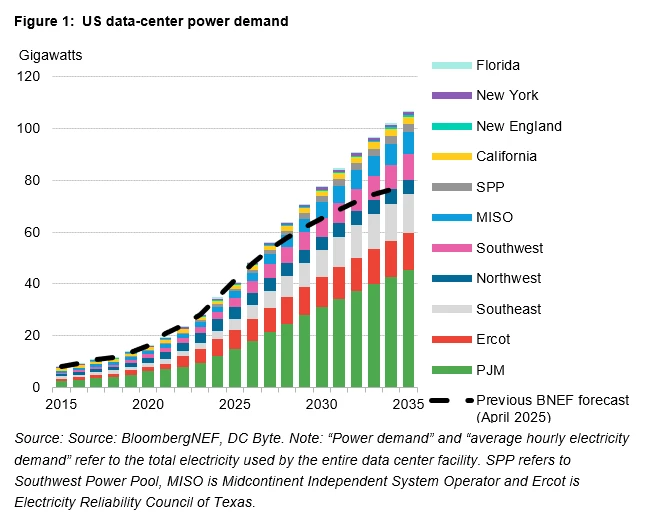
The energy piece is even more critical. Griffin’s call to "build the data centers in America" isn’t just patriotism—it’s pragmatism. The U.S. has natural gas reserves to power AI’s compute demands, but regulatory hurdles and NIMBYism are slowing deployment. Meanwhile, global data center electricity demand is projected to grow 5-7x by 2030, according to a 2026 report from the International Energy Agency. If the U.S. can’t meet that demand, the compute advantage shifts to countries with cheaper, more reliable energy—like China.
What Investors Should Watch
Griffin’s insights reveal three underappreciated risks for long-term investors:
1. Moat Erosion: AI is democratizing high-level analysis, eroding the competitive advantages of incumbents. The market may be overvaluing scale players and undervaluing visionaries.
2. Geopolitical Fragility: A Taiwan conflict isn’t priced into markets, but it could trigger a depression. Diversifying semiconductor exposure and stress-testing portfolios for GDP shocks is critical.
3. Compute and Energy Bottlenecks: The AI revolution requires massive compute power and energy. Companies that can’t afford the former or secure the latter will fall behind. Watch for regulatory progress on data center approvals and energy infrastructure.
The common thread? These aren’t short-term trading opportunities. They’re structural risks that could reshape markets over the next decade. Griffin’s advice to "monitor and maintain your exposures" is a reminder that resilience, not prediction, is the key to long-term investing.
Research briefing
Get new Monopoly MOAT research by email.
New analysis and publication updates, sent when they are published.
Discussion