Magnificent Seven's Dominance Is Now a Drag on the Market
The S&P 500's most concentrated bet in decades is underperforming as AI capex fails to justify valuations.
- Topic
- Market power
- Published
- Updated
- Reading time
- 4 min read
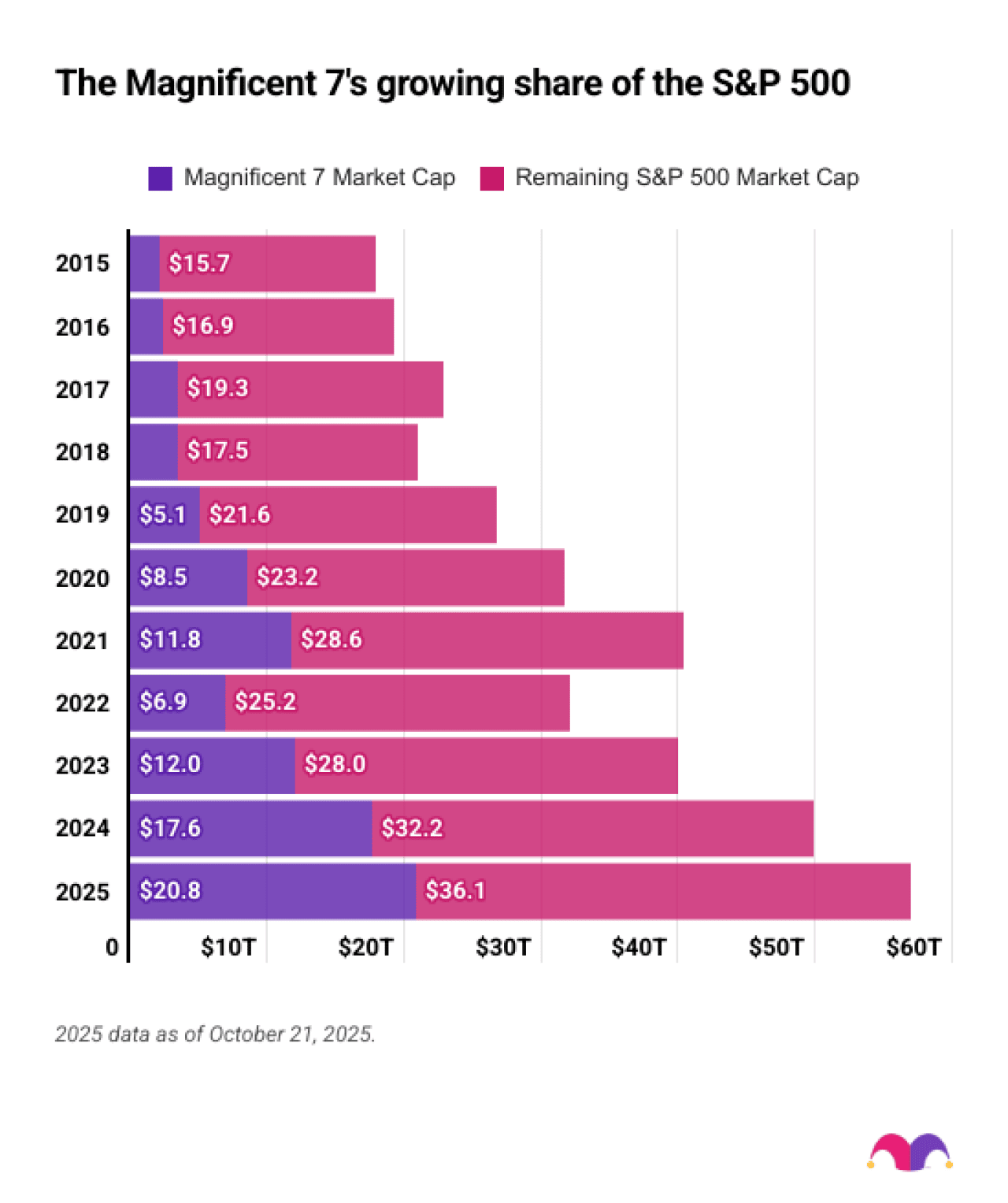
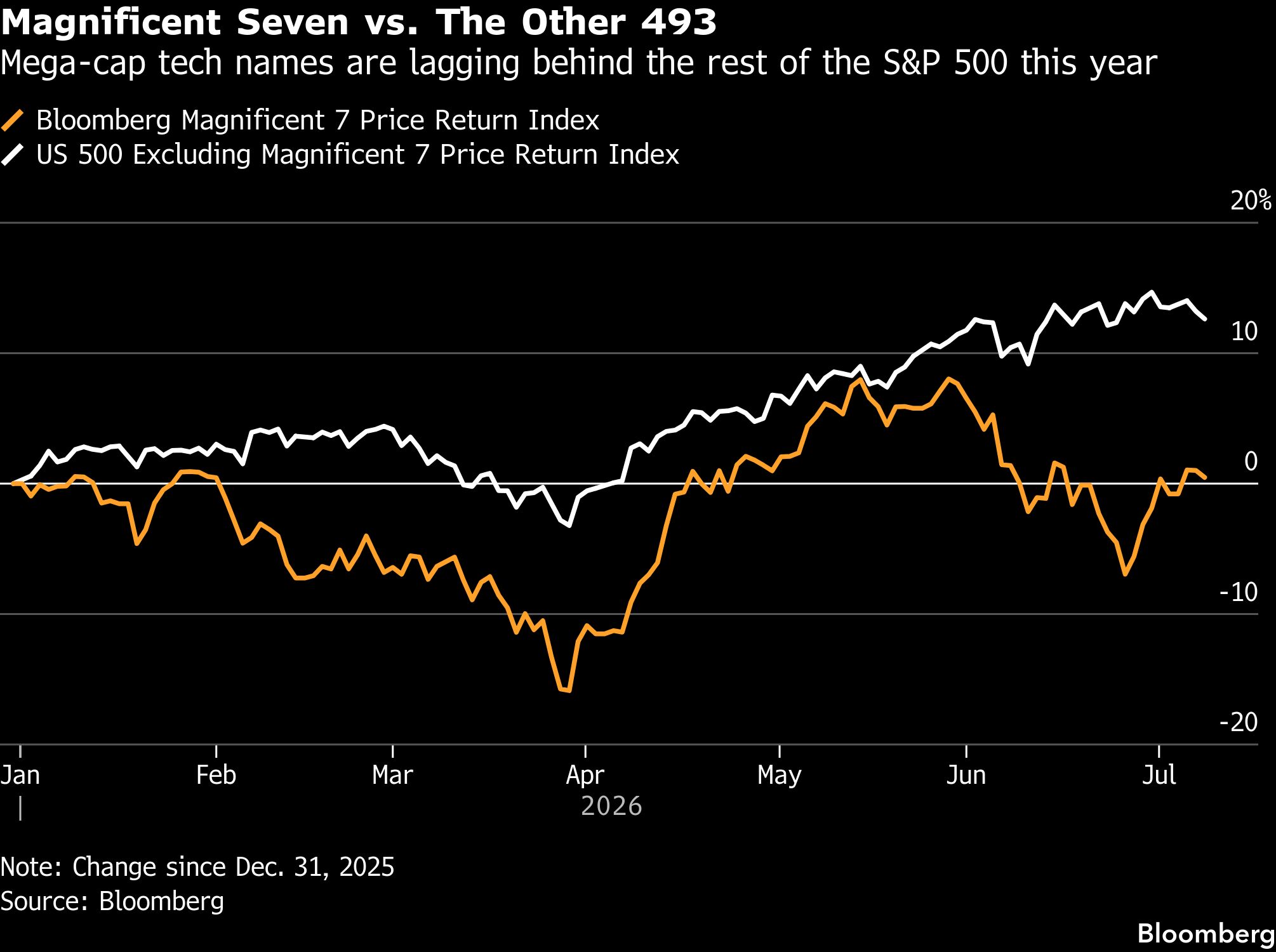
The S&P 500 is the most top-heavy it has been in at least 40 years. Seven stocks—Apple, Microsoft, Nvidia, Amazon, Meta, Alphabet, and Tesla—now account for 35% of the index's total market capitalization. That concentration has become a performance anchor. In 2026, every one of these stocks is down year-to-date, underperforming the broader market for the first time in years. The AI capital expenditure boom that once justified their premium valuations is no longer delivering the expected returns.
AI Capex and the Return That Hasn't Come
For years, these companies traded at valuations of 30x revenue or higher on the assumption that dominance at scale would compound indefinitely. Growth alone, however, does not guarantee returns — what matters is the return on that growth. Nvidia lost $130 billion in market value in a single session after reports of a $500 billion AI financing deal raised concerns about circular financing and overcapacity. Meta and Alphabet are spending billions on data centers and AI models with little near-term revenue to show for it. The market is no longer pricing in the assumption that scale and dominance will automatically translate into profits.
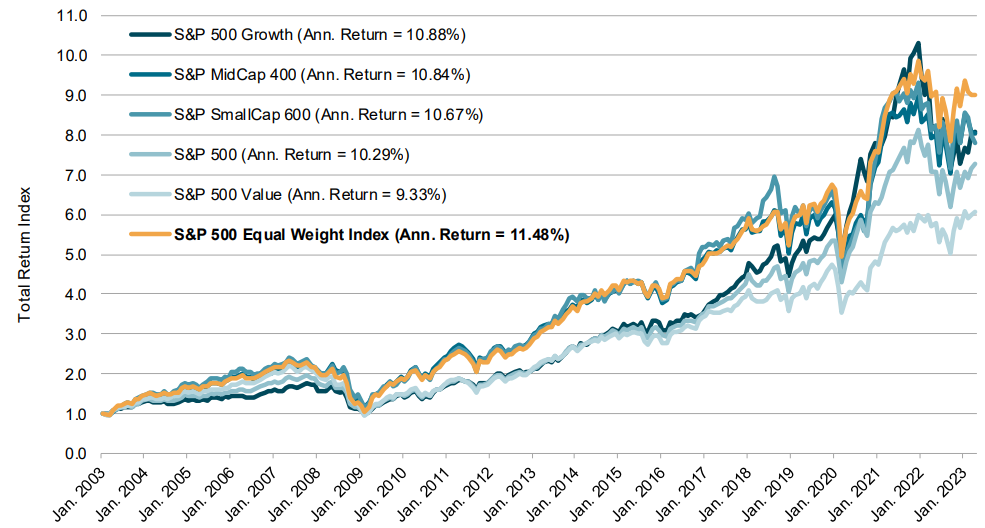
The underperformance is also a market-structure story. The S&P 500 is market-cap weighted, so when these seven stocks were rising they lifted the entire index, masking weakness elsewhere. Now the reverse is true. The equal-weight S&P 500, which gives each stock the same allocation regardless of size, has outperformed the market-cap-weighted version in 2026 — a sign of improving breadth, and of the most crowded trade of the decade unwinding.
The rotation away from the Magnificent Seven is an active one, not a passive drift. Advisors and institutional managers are deliberately reducing exposure to the most concentrated names. The primary beneficiaries have been dividend-paying stocks, value stocks, and international equities — a recognition that market leadership had grown too narrow. Dividend stocks offer cash flow, financial strength, and lower volatility, attributes that become more attractive as an AI capex cycle extends without clear returns.
When Moats Stop Justifying Multiples
The Magnificent Seven's underlying market positions remain formidable — Apple's ecosystem, Microsoft's enterprise dominance, Nvidia's AI chips, and Meta's advertising network are not going away. Durable competitive positions are only rewarded, though, when they produce free cash flow. Right now, the market is skeptical that AI investments will pay off at the scale required to justify current valuations. If the capex cycle extends without a corresponding increase in revenue, downward pressure on multiples is likely to persist. Structural moats are a necessary but insufficient condition for returns when capital is being deployed faster than it can compound.
Dollar Strength, Macro Fragility, and the Unwinding Cycle
There is a broader macro risk compounding the valuation pressure. The U.S. dollar's strength, sustained by global capital flows into U.S. assets, has masked underlying economic fragility. A weaker dollar — which some analysts consider likely — would reduce overseas earnings for multinationals when converted back to dollars, and many of the Magnificent Seven derive a significant portion of revenue abroad. That currency headwind adds another layer of fundamental risk on top of the capex-return question.
The dynamic now working against these stocks is the mirror image of what drove them higher. Rising valuations once attracted more capital, which pushed valuations further still. Underperformance now triggers outflows, which pressures valuations further. That cycle is unlikely to reverse until there is clarity on whether AI infrastructure spending produces revenue at a scale that closes the gap with current multiples. Until then, the S&P 500's 35% concentration in seven names is a structural risk — and the rotation into equal-weight strategies, dividend stocks, and value names reflects a broad reassessment of that bet.
Research briefing
Get new Monopoly MOAT research by email.
New analysis and publication updates, sent when they are published.
Discussion